Turtle

Thursday, May 16, 2013

LIFE OF WHITE SHARK


Life of Sea | Great White Shark (Carcharodon carcharias) | This animal is also known as theGreat white, White pointer, White shark, or White deathIn the film, is portrayed as very ferocious sharks and hunting and killing humans. The depiction is too excessive. In fact, these fish are endangered due to human activity. Great white sharks can be found in almost all coastal and offshore waters throughout the world. They used to live in sea water at temperatures between 12 and 24 ° C. Great white sharks normally live in surface waters down to depths of 1280 meters.In America, Great white sharks can be found on the coastline of California to Alaska, the east coast of the United States, the Gulf coast, Hawaii and South America. They are also found in South Africa, Australia (except the north coast), New Zealand, the Mediterranean Sea, West Africa to Scandinavia, and Japan to the east coast of China to Russia. 


Great white sharks have big and strong body. The body is torpedo-shaped where the snout is rather long and conical. They has a strong keel on the tail peduncle, but no secondary keel. The white part of their body is only at the bottom. The top of the shark is varied, ranging from gray brownish gray to black. Great white sharks have serrated and almost triangle teeth. The largest white shark ever found was more than 18 meters in length or 6 feet, weighing 2.268 kg. But. theaverage length body is about 4.6 meters.  Great white sharks are carnivorous. So, for food, they eat various marine species. They can eat many kinds of fish such as salmon, hake, halibut, mackerel and tuna. In addition, beside eating  small and medium fish, they also eat marine mammals like dolphins, harbor seals and sea turtles. Therefore, they become the largest predatory  in the world. 
Great white sharks are well-adapted predators. They have sharp sense of smell to detect  the prey from several kilometers distance. Even they have an organ that can sense weak electromagnetic vibrations generated another animal. Great white sharks can detect a single drop of blood in 100 liters of sea water within a distance of 5 kilometers or more. One thing that is very special for a predator. The scientists explained that sharks have an amazing arrangement of teeth. The mouth consists of 3000 resemble triangular serrated teeth that formed in a few lines. The upper teeth have larger size. The bottom teeth are more slender. When they lose their teeth due to catching preys or eating habits, it will soon be replaced with new teeth in about one or two days.
Needed to know that from more than 100 shark attacks around the world, a third or a half of the number of attacks were caused by Great white sharks. But, it should be emphasized that almost all attacks did not give serious effects. Recent studies shows that the Great white sharks have  great curiosity when they saw human is swimming in the sea. They are often just trying to do a bite and then release it. They will not prey on human. Despite the fact this is not good news at all, this study shows us that Great white sharks are not regard humans as their prey or their food.
Naturally, the decline in Great white sharks populations are influenced by the ability of femaleGreat white sharks to lay eggs. The female will lay two eggs in their lifetime. Surely, this greatly affects the amount of their population. However, this is not the main factor. Excessive fishing is a major factor. They are caught mainly for meat. In some cases, intentionally they are caught using large boat or they are trapped in nets. Looking the fact, the shark is not dangerous to humans, but humans are harmful to the Great white sharks. As a result of overfishing, they are currently listed as an endangered species.

LIFE OF BULL SHARK


Life of Sea | Bull Shark (Carcharhinus leucas) The Bull shark is also known as Zambezi sharks or unofficially known as Zambi in Africa and Nicaragua shark in Nicaragua. Bull shark is a shark common worldwide in warm, shallow waters along the coasts and in rivers. The Bull shark is known for its unpredictable, often aggressive behavior. The Bull shark is a potentially dangerous shark. They are very inquisitive and will likely show interest in you as you are diving in their waters. The Bull shark is the most abundant in sub-tropical to tropical coastal waters of South Africa, Mozambique, Mauritius, Myanmar, the Bahamas, Belize, Cuba, Costa Rica and the Bahamas.The Bull Sharks are most common in shallow waters in lagoons, bays and beaches along and are usually found in waters no deeper than 30 meters.


Bull sharks are the most common of about six species of river sharks: Ganges shark (Glyphis gangeticus), spear tooth shark (Glyphis glyphis), Irrawaddy rivers shark (Glyphis siamensis), Borneo river shark (Glyphis B. sp), and New Guinea river shark (Glyphis sp. C), which can travel between salt and fresh water and live in fresh water for longer periods. The Bull sharks are large shark with a firm body. The top of the shark is gray and the underside is white. Although bull sharks are heavy, they can still swim fast. Their muzzle is broader than long. Therefore they are calledBull sharkThe teeth are triangular, serrated and very sharp. The eyes are small. The female is larger than the male.
The Bull sharks will eat almost anything. They eat fish (including other sharks and rays), turtles, birds, molluscs, crustaceans, and dolphins. They are contained in sea mammals. Bull sharks are usually solitary hunters, but sometimes hunt in pairs. They often cruise through shallow waters.They can accelerate quickly and can be very aggressive. hey are very territorial and attack animals that enter their territory. Because Bull sharks often dwell in shallow waters, they more dangerous to humans than other species of sharks and, along with the tiger shark and great white shark, among the three shark species most likely to attack people.
Bull sharks are considered high risk and are considered one of the top four sharks responsible for attacks on humans. Not only do they exist in the ocean, but far above the river. Attacks are known to have happened in many rivers around the world. Many attacks in the past were attributed to white sharks, but researchers are now looking for the Bull shark as the main culprit of many attacks. As with the Tiger Shark, it's all about how you're around them, like most animals. Many divers interact with these sharks daily in South Africa and even the dive are non-nerving sometimes there are no incidents.

The Bull sharks are one of the most frequent attacker of people. They swim in very shallow water where people swim and is an aggressive shark. So do not forget to swim near river mouths or estuaries with turbid waters where Bull sharks are known to prevent avoidance. It is not allowed to swim near schools of fish along the coast. These schools are often chased by large predators.Last, you should be cautious if spearfishing. Bull sharks are known to spear fishermen carrying their catch approach. Bull sharks are considered one of the most dangerous species of tropical sharks, they are involved in a number of attacks on humans. They are commercially harvested and sold fresh, fresh frozen, or smoked for human consumption. They are also fins for shark fin soup.Their skins are sold for learning, for their liver oil, and their carcass for fishmeal.

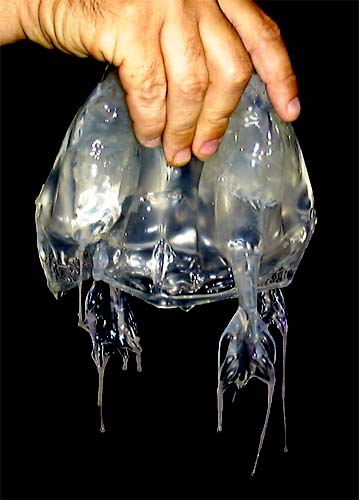
LIFE OF BOX JELLYFISH


Life of Sea | Sea Wasp (Chironex flecker) | Sea wasp or Box Jellyfish or Box Fish is the most poisonous sea creature than stone fish, sharks or sea snakes. Even it is a beautiful jelly, it has slain more people than other marine animals. Box jellyfish are usually found in shallow water. If you see the Box jellyfish to the sea, you are not allowed to water activities to do. They live in the coastal waters of northern Australia and New Guinea to the north to the Philippines and Vietnam. 


The Box jellyfish has a large transparent bubble or cube as the body and is divided into segments. They have a transparent body with a light blue color. It has stinging tentacles. Each tentacle of a jellyfish box can store up to 5,000 of these nematocysts. The Box jellyfish uses these tentacles to catch its prey, such as small fish and crustaceans. Box jellyfish is, unlike many other jellyfish, equipped with four eyes. Eyes are connected to a nerve ring and the creature can take evasive action or move to his prey. Two of the eyes in the set to detect only light. It has no brain, no heart and no blood. 
 
Box jellyfish feed on small crustaceans and small fish. These animals have a strategy to capture their prey. They will wait for prey to bump into their tentacles. They will then slain by their stinging tentacles to poison Stong. However, turtles are not affected by stabbing them. Sea turtles lay their predator. Box jellyfish is responsible for more deaths than in Australian snakes, sharks and saltwater crocodiles. 
Box jellyfish are known for the highly potent poison produced by a number of species: Chironex fleckeri, Carukia barnesi and Malo Kingi are among the most poisonous animals in the world. Stings from these and some other species in the class are very painful and sometimes fatal to humans. In most cases, the sting of the Box jellyfish do not cause death, but it always has the potential to do so. In fact, the jellyfish, the most toxic, releases a small amount of poison that it rarely causes death. However, each stitch is extremely painful and requires immediate medical attention. In the worst cases of stabbing, anti-poison can be applied.
 
The poison of the Box jellyfish has cardiotoxic, neurotoxic and highly dermatonecrotic components. When injected, it is quickly absorbed into the circulation. The pain is unbearable, the tentacles are sticky and adhere tightly to the skin. Any attempt to remove the tentacles while they are still active may worsen the sting and cause major injuries. Severe stabbing result in necrosis of the affected skin. If treatment is not given, the pain may take weeks and often leave significant scars stabbing.
Domestic vinegar (never methylated spirits) to be poured over the tentacles stick to inactivate nematocysts as soon as possible. If the tentacles are inactive, they can be safely removed. (The use of vinegar is not intended to reduce pain or to reduce effects of the poison, it will only stop further discharge of nematocysts). In case of respiratory or cardiovascular collapse, basic life support, such as artificial respiration and CPR required. Where antivenom is not available, the pressure-immobilisation of limbs after inactivation of nematocysts are used while the patient is transported to the hospital.

KIND OF FISHES IN CORAL REEF


Cichlids span a range of body sizes, from species as small as 2.5 cm (0.98 in) in length (eg, female Neolamprologus multifasciatus) for the larger species approaching 1 meter (3.3 feet) in length (eg Boulengerochromis and Cichla). As a group, cichlids exhibit a similar diversity of body shapes, ranging from strongly laterally compressed species (such Altolamprologus.
Pterophyllum, and Symphysodon) to species that are cylindrical and highly elongate (such Julidochromis Cyprichromis leptosoma, Teleogramma, Teleocichla, Crenicichla, and Gobiocichla). Generally, however, cichlids tend to be of medium size, ovate in shape and slightly laterally compressed, and generally similar to the North American sunfishes in morphology, behavior, and ecology.
Many cichlids, particularly tilapia, are important food fishes, while others are valued game fish (eg Cichla species). The family also includes many familiar aquarium fish, including the angelfish, Oscar, and discussion. Cichlids have the largest number of endangered species among vertebrate families, most in the haplochromine group. 
Cichlids are well known for having evolved rapidly into a large number of species that are closely related but morphologically diverse in large lakes, particularly Tanganyika, Victoria, Malawi, and Edward. Their diversity in the African Great Lakes is important for the study of speciation in evolution. Many cichlids that have been introduced into waters outside of their natural range have become nuisance, such as tilapia in the southern United States.

find here another sea creatures

Life of Sea | Cichlids Fish  | Cichlids fish from the family Cichlidae in the order Perciformes.Cichlids are members of a group known as Labroidei, along with the wrasses (Labridae), fish damselfish (Pomacentridae), and surfperches (Embiotocidae). This family is both large and diverse. At least 1,650 species have been scientifically described, making it one of the largest vertebrate families. New species discovered every year, and many species remain undescribed. Therefore the actual number of species is unknown, with estimates varying between 2,000 and 3,000. Cichlids are freshwater fish one of the most popular kept in home aquariums.

Cichlids span a range of body sizes, from species as small as 2.5 cm (0.98 in) in length (eg, female Neolamprologus multifasciatus) for the larger species approaching 1 meter (3.3 feet) in length (eg Boulengerochromis and Cichla). As a group, cichlids exhibit a similar diversity of body shapes, ranging from strongly laterally compressed species (such Altolamprologus.
Pterophyllum, and Symphysodon) to species that are cylindrical and highly elongate (such Julidochromis Cyprichromis leptosoma, Teleogramma, Teleocichla, Crenicichla, and Gobiocichla). Generally, however, cichlids tend to be of medium size, ovate in shape and slightly laterally compressed, and generally similar to the North American sunfishes in morphology, behavior, and ecology.
Many cichlids, particularly tilapia, are important food fishes, while others are valued game fish (eg Cichla species). The family also includes many familiar aquarium fish, including the angelfish, Oscar, and discussion. Cichlids have the largest number of endangered species among vertebrate families, most in the haplochromine group. 
Cichlids are well known for having evolved rapidly into a large number of species that are closely related but morphologically diverse in large lakes, particularly Tanganyika, Victoria, Malawi, and Edward. Their diversity in the African Great Lakes is important for the study of speciation in evolution. Many cichlids that have been introduced into waters outside of their natural range have become nuisance, such as tilapia in the southern United States.


DANGEROUS SHARK


Life under the sea
A collection of stills .


OCEANIC WHITETIP SHARK


Skerry captures an oceanic whitetip shark and diver in the Bahamas. He says he has had countless magical encounters with sharks, an animal he considers to be perfect.